Agri Business Management
Explore opportunities in Agri-Business Management.
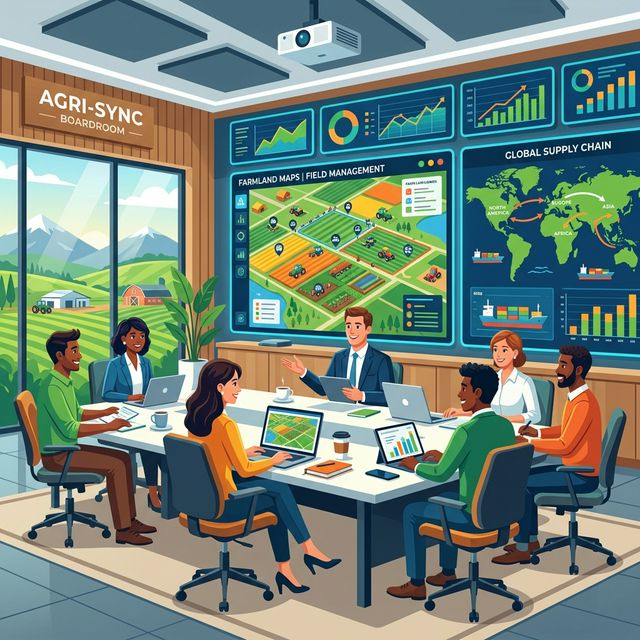
Career Overview
Understanding the fundamentals of Agri Business Management
Career Growth
Build a successful career in Agri-Business Management.
Market Demand
High demand in the industry.
Global Opportunities
Work globally in this field.
What is This Career All About?
Understanding Agri-Business Management.
Agri-Business Management is a dynamic and rewarding career path.
It offers opportunities for growth and development.
Professionals in this field make a significant impact.
The industry is evolving with new technologies.
Career prospects are excellent for qualified candidates.
A Day in the Life: Priya, Agri-Business Manager at ITC
Real workflow of an agri-business professional.
Field Visit & Farmer Engagement
Priya starts her day at a farmer cooperative in rural Maharashtra. She meets with 50+ farmers to understand their crop yield, soil health, and market concerns. She collects soil samples and takes photos of the cotton fields using her smartphone app.
Data Analysis & Market Research
Back at the office, Priya enters the field data into a cloud-based platform. She analyzes cotton prices from the Nagpur mandi, checks global cotton futures, and identifies the best time to procure from farmers. She also reviews competitor pricing from other agri-companies.
Supply Chain Coordination
Priya coordinates with the procurement team, warehouse managers, and logistics partners. She ensures that 500 tons of cotton collected from farmers reaches the processing unit on time. She troubleshoots a delayed shipment and reroutes it via an alternate route.
Client & Stakeholder Meeting
She presents a quarterly report to her manager on farmer retention, procurement costs, and profit margins. She proposes a new 'Organic Cotton' initiative that could increase farmer income by 20% and open premium markets.
Training & Farmer Support
Priya conducts a training session for 30 farmers on 'Sustainable Farming Practices' and 'Digital Payment Systems.' She explains how using drip irrigation can save water and increase yields.
Planning & Documentation
Before leaving, Priya updates her project tracker, sends emails to stakeholders, and plans tomorrow's field visits. She feels satisfied knowing that her work directly impacts the livelihoods of hundreds of farming families.
Is This You? Personality Traits & Skills
Self-assessment for the ideal candidate.
Analytical mindset
Problem-solving ability
Communication skills
Attention to detail
Continuous learning attitude
Key Responsibilities & Workflow
The complete professional process.
Planning and analysis
Implementation and execution
Monitoring and evaluation
Reporting and documentation
Continuous improvement
Career Pathways in India
Educational journey from Class 10 onwards.
Pathway A
Degree Route
Step 1
Complete Class 12th (PCM/PCB/Commerce)
Step 2
Pursue BBA in Agri-Business / B.Sc Agriculture
Step 3
Do summer internships at agri-firms like ITC, Mahindra Agri
Step 4
Learn tools — SAP, MS Excel, supply chain basics
Step 5
Complete MBA in Agri-Business (MANAGE Hyderabad, IIM-A ABM)
Step 6
Join as Agri-Business Manager, Supply Chain Analyst, or Commodity Trader
Pathway B
Skill-Based Entry
Step 1
Complete Class 12th (any stream)
Step 2
Take diploma in Agriculture / Agri-Business
Step 3
Gain field experience — FPOs, cooperatives, mandis
Step 4
Learn digital tools — AgroStar, DeHaat platforms
Step 5
Get certified in agri-supply chain or rural management
Step 6
Work as Field Coordinator, Procurement Officer, or Agri-Sales Executive
Pathway C
Domain Switch Route
Step 1
Complete Class 12th (Commerce/Science)
Step 2
Pursue B.Com / BBA / B.Sc
Step 3
Work 1–2 years in sales, logistics, or banking
Step 4
Enroll in PG Diploma — Rural Management (IRMA) or Agri-Business
Step 5
Intern with agri-startups like Ninjacart, DeHaat
Step 6
Transition as Agri-Business Consultant, Rural Marketing Manager, or Agri-Finance Analyst
Market Snapshot — India 2026
Salaries, growth, and opportunities.
Salary Snapshot (Annual INR)
| Career Level | Est. Salary (p.a.) |
|---|---|
| CXO / Top Leadership (15+ yrs) | ₹50 LPA – ₹2+ Crore |
| Senior / Lead Role (10+ yrs) | ₹20–60 LPA |
| Mid-Level Professional (5–8 yrs) | ₹10–25 LPA |
| Junior / Associate (3–5 yrs) | ₹5–15 LPA |
| Entry Level (0–2 yrs) | ₹3–8 LPA |
Note
Salaries vary by location, experience, and specialization.
Where Are the Jobs?
Top cities and industries.
Top Cities
Delhi-NCR, Mumbai, Pune, Hyderabad, Bengaluru, Ahmedabad
Top Industries
Agri Corporates, FMCG, Food Processing, AgriTech, Supply Chain, Government Projects
Global Demand
High in USA, Netherlands, Australia; rising remote consulting, agri-tech startups
Where to Study?
Top institutions across India.
Government
- •Indian Institute of Management (IIM) Ahmedabad
- •Indian Institute of Management (IIM) Bangalore
- •National Institute of Agricultural Extension Management (MANAGE) Hyderabad
- •Indian Agricultural Research Institute (IARI) New Delhi
Private
- •Manipal Academy of Higher Education
- •Amity University Noida
- •Lovely Professional University (LPU) Jalandhar
- •Shoolini University Solan
Online
- •Swayam/NPTEL
- •Coursera (Agri-Business Courses)
- •IGNOU (Agriculture Management Programs)
- •Udemy (Agri-Business & Supply Chain Courses)
Career Opportunities
Various career roles.
Conventional
Farm Operations Manager, Agricultural Marketing Officer, Commodity Trading Analyst, Rural Banking & Agri-Credit Officer
New-Age & AI Driven
Precision Agriculture Data Analyst, Agri-Tech Product Manager, Drone-Based Crop Monitoring Specialist, AI-Powered Supply Chain Optimizer
Remote/Entrepreneurship
Agri E-Commerce Platform Founder, Farm-to-Fork Consulting (Freelance), Organic Brand Builder & Online Retailer , Agri-Business Content Creator Advisor
Realistic Challenges
The hard truths of the profession.
Seasonal Volatility
Agricultural markets are highly seasonal; income and workload fluctuate dramatically between harvest and off-seasons.
Weather Dependency
Crop failures due to unexpected weather can disrupt entire supply chains and business plans.
Farmer Resistance
Convincing traditional farmers to adopt new practices or technologies requires patience, cultural sensitivity, and trust-building.
Thin Margins
Agri-business operates on thin profit margins; small inefficiencies can lead to significant losses.
Infrastructure Challenges
Poor rural infrastructure, limited cold storage, and inadequate transportation networks complicate operations.
Regulatory Complexity
Navigating agricultural policies, export regulations, and subsidy schemes requires constant attention.
Market Unpredictability
Global commodity prices, trade policies, and market demand can shift rapidly.
Field Work Demands
Regular field visits mean exposure to harsh weather, long hours, and remote locations.
Emerging Trends (2025–2035)
What's next in agri-business.
AgriTech Revolution
AI-powered crop monitoring, blockchain for supply chain transparency, and IoT sensors for real-time farm data.
Direct-to-Consumer Models
Farm-to-table platforms eliminating middlemen and increasing farmer income by 30–50%.
Precision Agriculture
Data-driven farming using drones, satellites, and sensors to optimize inputs and maximize yields.
Organic & Sustainable Farming
Growing demand for organic, pesticide-free, and environmentally sustainable produce.
Climate-Smart Agriculture
Developing drought-resistant crops and water-efficient farming methods to combat climate change.
Vertical & Indoor Farming
Urban farming solutions reducing transportation costs and ensuring year-round production.
Agri-Finance Innovation
Digital lending platforms providing quick credit to farmers without collateral.
Export-Oriented Agriculture
India's growing role in global agri-exports, especially organic and specialty crops.
Core Skills Required
Technical and soft skills for success.
Data Analysis: Excel, Python, SQL for market analysis and supply chain optimization.
Supply Chain Management: Understanding logistics, inventory, and procurement processes.
Agricultural Knowledge: Basic understanding of crop cycles, soil health, and farming practices.
Communication: Ability to bridge the gap between farmers, corporate teams, and stakeholders.
Problem-Solving: Quick decision-making in unpredictable situations.
Digital Tools: Familiarity with ERP systems, CRM software, and agri-tech platforms.
Financial Acumen: Understanding profit margins, cost analysis, and business metrics.
Negotiation: Skill in negotiating prices with farmers and buyers.
Project Management: Coordinating multiple initiatives across teams and locations.
Sustainability Mindset: Understanding environmental impact and sustainable practices.
Professional Certifications & Bodies
Credentials to boost your career.
APEDA (Agricultural & Processed Food Products Export Development Authority)
Certification for export-quality produce.
ISO 9001 & ISO 22000
Quality management and food safety certifications.
Organic Certification
NPOP (National Programme for Organic Production) certification for organic farming.
Supply Chain Certifications
APICS CSCP (Certified Supply Chain Professional).
Digital Agriculture Certifications
Coursera, edX courses on precision agriculture and agri-tech.
MBA in Agri-Business
From institutions like IIM, MANAGE, or IRMA.
Professional Bodies
Indian Society of Agribusiness Professionals (ISAP), Agricultural Produce Export Development Authority.
Top Employers in India
Leading companies hiring agri-business professionals.
Agri Corporates: ITC Limited, Mahindra Agri, Syngenta, Bayer CropScience, BASF India.
FMCG & Food Processing: Nestlé, Britannia, Amul, Mother Dairy, Hindustan Unilever.
AgriTech Startups: DeHaat, Ninjacart, AgroStar, Farmizen, Waycool Foods.
Retail & E-Commerce: BigBasket, Grofers, Amazon Fresh, Flipkart.
Financial Services: NABARD, ICICI Bank (Agri-Finance), HDFC Bank, Axis Bank.
Government & NGOs: Ministry of Agriculture, ICAR, ATMA, NGOs focused on rural development.
Export Companies: Spice exporters, fruit & vegetable exporters, organic product companies.
Skills to Build While Still in School
Actionable steps to start your journey.
Learn Excel & Data Analysis
Master spreadsheets for analyzing agricultural data.
Visit Local Mandis
Understand how agricultural markets work and price fluctuations.
Read Agricultural News
Follow publications like The Hindu's agriculture section, Krishi Jagran.
Learn Basic Coding
Python or SQL for data analysis in agri-tech.
Volunteer with NGOs
Work with organizations focused on rural development and sustainable farming.
Start a Small Farm Project
Grow vegetables or fruits in your backyard or community garden.
Understand Supply Chains
Learn how products move from farm to table.
Follow Agri-Tech Companies
Stay updated on innovations in the sector.
Inspiring Indian Personalities in Agri-Business
Role models and industry leaders.
Siddharth Jain (DeHaat Founder)
Revolutionized agri-tech by connecting farmers directly to markets, eliminating middlemen.
Sanjeev Krishnan (Ninjacart Founder)
Built a supply chain platform that ensures fresh produce reaches consumers within 24 hours.
Harish Hande (Founder, SELCO)
Pioneer in solar energy for agriculture, providing affordable renewable energy to farmers.
Radhika Reddy (AgroStar Founder)
Created a digital platform providing farmers with real-time market prices and agricultural advice.
Binny Bansal (Flipkart Co-founder)
Expanded into agri-commerce, bringing farm-fresh products to urban consumers.
Anil Rai Gupta (Founder, Husk Power Systems)
Innovator in converting agricultural waste into renewable energy.
Namita Nandal (Founder, Waycool Foods)
Built a farm-to-consumer platform ensuring fair prices for farmers and fresh produce for consumers.
Global Opportunities & International Scope
Career prospects beyond India.
USA: High demand for agri-business professionals in commodity trading, agricultural finance, and farm management.
Netherlands: Global hub for agricultural innovation; opportunities in precision farming and agri-tech.
Australia: Large-scale farming operations and agricultural exports; demand for supply chain and business management professionals.
Brazil: Major agricultural exporter; opportunities in commodity trading and agri-business management.
Africa: Growing agri-tech sector with opportunities for consultants and business development professionals.
Middle East: Demand for agricultural imports and agri-business consultants.
Remote Work: Many agri-tech companies offer remote positions for market analysis, data analytics, and business consulting.
International Organizations: FAO, World Bank, CGIAR offer opportunities in agricultural development and policy.
Learn More Through Videos
Watch expert insights and student experiences
Agri-Business Management Career Overview - Cultivating the Future
Video 1 of 3